在 Spring Security(1) 这一节中已经介绍了如何用Spring Security+JWT实现认证+授权的功能,本节再做一些分析和拓展。
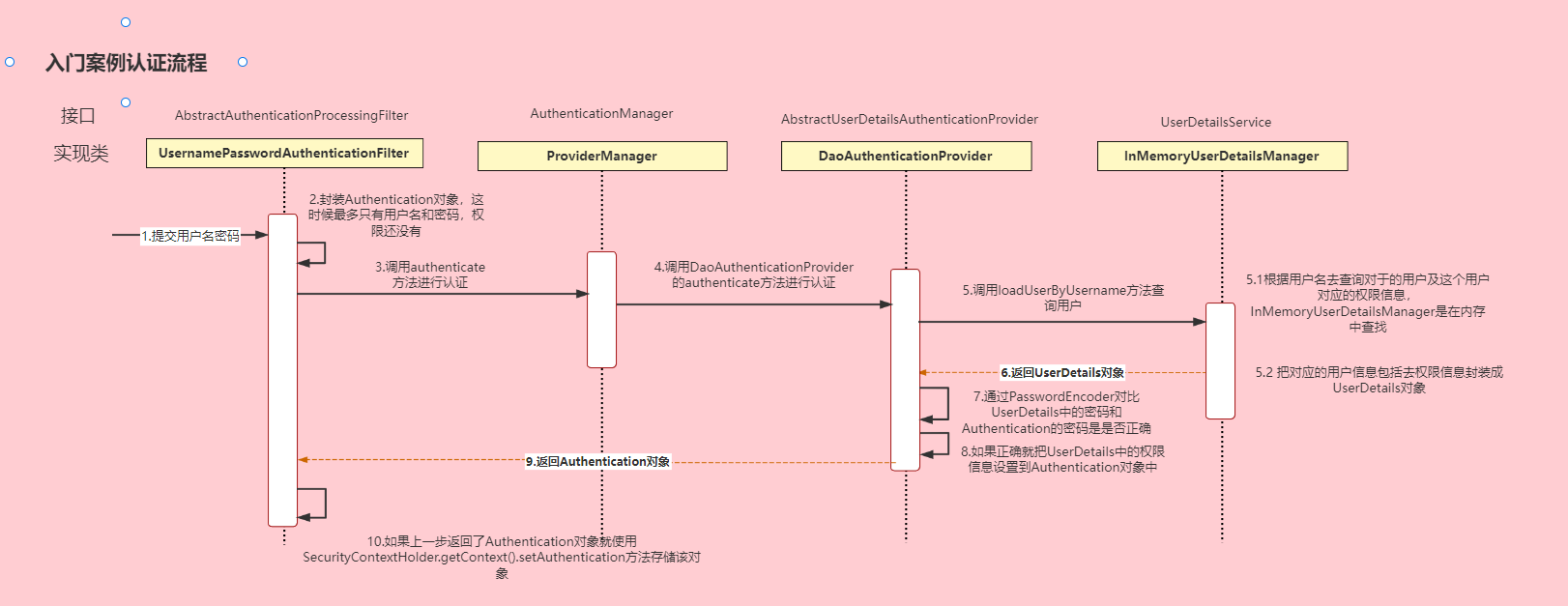
Spring Security默认认证的流程 在**Spring Security(1)**这一节中有一个helloworld的例子,它使用的是Spring Security默认的认证(登录),其流程大致如下图。
跟我们后面的自定义登录接口最大的不同点是UserDetailsService的loadUserByUsername方法,是从内存中查询的用户和权限,而不是数据库,并且内存中也只有一个用户的数据。
HttpSecruity配置接口授权 Spring Security中的权限有两种,一个是角色的,另一种就是普通的权限,通过HttpSecruity来配置的方式很灵活,一种是hasRole、hasAuthority的方法,一种是access({权限表达式})的方式。
参考如下代码。
1
2
3
4
5
6
7
8
httpSecurity. .antMatchers("/test1" ).hasRole("ADMIN" ) .antMatchers("/test2" ).access("hasRole('ROLE_ADMIN')" ) .antMatchers("/test3" ).hasAnyRole("AMDIN" , "USER" ) .antMatchers("/test4" ).access("hasRole('ROLE_USER') or hasRole('ROLE_SUPER')" ) .antMatchers("/test5" ).hasAuthority("read" ) .antMatchers("/test6" ).access("hasAuthority('read')" ) .antMatchers("/test7" ).hasAnyAuthority("read" , "write" )
Spring Security中的组件 UserDetails UserDetails表示用户信息。它是一个接口,Spring Security中已经自带了一些实现类,但Spring Security并不是用它来做认证与授权的,而是将用户的一些信息封装在一个Authentication对象中,用这个Authentication对象来控制权限。
Authentication Authentication 表示鉴权对象,该对象主要包含了用户的详细信息(UserDetails)和用户鉴权时所需要的信息,比如如用户提交的用户名密码、Remember-me Token,或者digest hash值等,按不同鉴权方式使用不同的Authentication实现。最常用的一个实现类就是UsernamePasswordAuthenticationToken,它里面就包含了:
principal:用于识别用户身份,如果使用用户名/密码方式执行的认证,这通常是一个 UserDetails 实例。
credentials:通常是密码,在很多情况下,一旦用户通过身份认证,这部分内容便会被清除以确保不会泄露。
authorities:GrantedAuthority 集合,是用户被授予的更高级别权限,如角色和范围。
Authentication 主要有如下两个作用:
作为 AuthenticationManager 的输入提供用户提交的用于身份认证的凭据。在此场景下使用时 isAuthenticated() 方法返回 false;
代表当前已通过身份认证的用户,可以从 SecurityContext 中获取当前的 Authentication 对象。
GrantedAuthority GrantedAuthority是一个接口,表示当前用户所拥有的的权限(或角色)信息。这些信息有授权负责对象AccessDecisionManager来使用,并决定最终用户是否可以访问某资源(URL或方法调用或域对象)。鉴权时并不会使用到该对象。
在UserDetails接口中有一个方法: Collection<? extends GrantedAuthority> getAuthorities();,用来返回用户被授予的所有权限,因为GrantedAuthority中只有一个String getAuthority();方法,所以用户的权限我们用字符串来表示就可以了。比如GrantedAuthority的其中一个实现类SimpleGrantedAuthority,它用一个role属性来权限。在比如我们用HttpSecurity用来配置授权时,也是用的‘ROLE_ADMIN’、‘read’这种字符串来表示的。
1
2
3
4
5
6
7
8
9
10
11
12
13
14
15
16
17
18
public final class SimpleGrantedAuthority implements GrantedAuthority { private static final long serialVersionUID = SpringSecurityCoreVersion.SERIAL_VERSION_UID; private final String role; public SimpleGrantedAuthority (String role) { Assert.hasText(role, "A granted authority textual representation is required" ); this .role = role; } @Override public String getAuthority () { return role; } }
而在**Spring Security(1)**这一节的例子中,也是通过一个set来存储系统用户的权限的。
1
2
3
4
5
6
7
8
9
10
11
12
13
14
15
16
17
18
19
20
21
22
23
24
25
26
27
28
29
30
31
32
33
34
35
36
37
38
39
40
41
42
43
44
45
46
47
48
49
@Getter @Setter public class SysUser implements UserDetails { private Integer id; private String username; private String password; private String nickname; private Set<GrantedAuthority> authorities; public SysUser () { } public SysUser (Integer id, String username, String password, String nickname) { this .id = id; this .username = username; this .password = password; this .nickname = nickname; } public void buildAuthorities (Set<String> set) { if (set != null ) { authorities = new HashSet <>(); for (String s : set) { authorities.add(new SimpleGrantedAuthority (s)); } } } @Override public Collection <? extends GrantedAuthority> getAuthorities () { return this .authorities; } }
AuthenticationManager AuthenticationManager(接口)是认证相关的核心接口,也是发起认证的出发点,因为在实际需求中,我们可能会允许用户使用用户名+密码登录,同时允许用户使用邮箱+密码,手机号码+密码登录,甚至,可能允许用户使用指纹登录,所以说AuthenticationManager一般不直接认证,AuthenticationManager接口的常用实现类ProviderManager内部会维护一个 List 列表,存放多种认证方式,实际上这是委托者模式的应用(Delegate)。也就是说,核心的认证入口始终只有一个:AuthenticationManager,不同的认证方式:用户名+密码(UsernamePasswordAuthenticationToken),邮箱+密码,手机号码+密码登录则对应了三个AuthenticationProvider。其中有一个重要的实现类是ProviderManager。
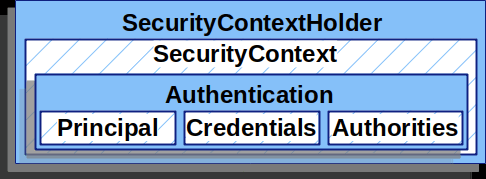
SecurityContextHolder SecurityContextHolder是保存安全上下文(SecurityContext)的一个容器,其原理是利用ThreadLocal在本地线程中存储数据,SecurityContext则可以用来承载GrantedAuthority,总体上如下图的关系。
如下是将授权信息保存到上下文中的代码示例:
1
2
3
4
5
SecurityContext context = SecurityContextHolder.createEmptyContext(); Authentication authentication = new TestingAuthenticationToken ("username" , "password" , "ROLE_USER" ); context.setAuthentication(authentication); SecurityContextHolder.setContext(context);
当然,也可以从上下文中取出用户信息与授权信息:
1
2
3
4
5
SecurityContext context = SecurityContextHolder.getContext(); Authentication authentication = context.getAuthentication(); String username = authentication.getName(); Object principal = authentication.getPrincipal(); Collection <? extends GrantedAuthority> authorities = authentication.getAuthorities();
ExceptionTranslationFilter ExceptionTranslationFilter是Spring Security用来处理异常的过滤器。查看它的源码可以看到它主要处理了两种异常:AuthenticationException 和 AccessDeniedException。doFilter方法,正常不做任何处理,直接调用过滤器链的下一个过滤方法,只有出现异常的时候,会调用handleSpringSecurityException方法去处理异常。
1
2
3
4
5
6
7
8
9
10
11
12
13
14
15
16
17
18
19
20
21
22
23
24
25
26
27
28
29
30
31
32
33
34
35
36
37
38
39
40
41
42
43
44
45
public void doFilter (ServletRequest req, ServletResponse res, FilterChain chain) throws IOException, ServletException { HttpServletRequest request = (HttpServletRequest) req; HttpServletResponse response = (HttpServletResponse) res; try { chain.doFilter(request, response); logger.debug("Chain processed normally" ); } catch (IOException ex) { throw ex; } catch (Exception ex) { Throwable [] causeChain = throwableAnalyzer.determineCauseChain(ex); RuntimeException ase = (AuthenticationException) throwableAnalyzer .getFirstThrowableOfType(AuthenticationException.class, causeChain); if (ase == null ) { ase = (AccessDeniedException) throwableAnalyzer.getFirstThrowableOfType( AccessDeniedException.class, causeChain); } if (ase != null ) { if (response.isCommitted()) { throw new ServletException ("Unable to handle the Spring Security Exception because the response is already committed." , ex); } handleSpringSecurityException(request, response, chain, ase); } else { if (ex instanceof ServletException) { throw (ServletException) ex; } else if (ex instanceof RuntimeException) { throw (RuntimeException) ex; } throw new RuntimeException (ex); } } }
在handleSpringSecurityException方法中对AuthenticationException 和 AccessDeniedException两种异常分别做处理,其中AccessDeniedException异常中还会判断接口是否是可以匿名访问或者有记住我(RemenberMe)的权限。
1
2
3
4
5
6
7
8
9
10
11
12
13
14
15
16
17
18
19
20
21
22
23
24
25
26
27
28
29
30
31
32
33
34
35
36
37
private void handleSpringSecurityException (HttpServletRequest request, HttpServletResponse response, FilterChain chain, RuntimeException exception) throws IOException, ServletException { if (exception instanceof AuthenticationException) { logger.debug( "Authentication exception occurred; redirecting to authentication entry point" , exception); sendStartAuthentication(request, response, chain, (AuthenticationException) exception); } else if (exception instanceof AccessDeniedException) { Authentication authentication = SecurityContextHolder.getContext().getAuthentication(); if (authenticationTrustResolver.isAnonymous(authentication) || authenticationTrustResolver.isRememberMe(authentication)) { logger.debug( "Access is denied (user is " + (authenticationTrustResolver.isAnonymous(authentication) ? "anonymous" : "not fully authenticated" ) + "); redirecting to authentication entry point" , exception); sendStartAuthentication( request, response, chain, new InsufficientAuthenticationException ( messages.getMessage( "ExceptionTranslationFilter.insufficientAuthentication" , "Full authentication is required to access this resource" ))); } else { logger.debug( "Access is denied (user is not anonymous); delegating to AccessDeniedHandler" , exception); accessDeniedHandler.handle(request, response, (AccessDeniedException) exception); } } }
AuthenticationException 对于 AuthenticationException 这种异常,它是用一个AuthenticationEntryPoint实例去处理。而这个AuthenticationEntryPoint实例是在创建ExceptionTranslationFilter对象时传进来的。
1
2
3
4
5
6
7
8
9
10
11
12
13
14
15
16
17
18
19
20
21
22
23
private AuthenticationEntryPoint authenticationEntryPoint;public ExceptionTranslationFilter (AuthenticationEntryPoint authenticationEntryPoint, RequestCache requestCache) { Assert.notNull(authenticationEntryPoint, "authenticationEntryPoint cannot be null" ); Assert.notNull(requestCache, "requestCache cannot be null" ); this .authenticationEntryPoint = authenticationEntryPoint; this .requestCache = requestCache; } protected void sendStartAuthentication (HttpServletRequest request, HttpServletResponse response, FilterChain chain, AuthenticationException reason) throws ServletException, IOException { SecurityContextHolder.getContext().setAuthentication(null ); requestCache.saveRequest(request, response); logger.debug("Calling Authentication entry point." ); authenticationEntryPoint.commence(request, response, reason); }
而AuthenticationEntryPoint的实例又是在ExceptionHandlingConfigurer类的configure方法中创建的。
1
2
3
4
5
6
7
8
9
10
11
12
13
14
15
16
17
18
19
20
21
22
23
24
25
26
27
28
29
30
31
32
33
34
35
36
37
38
39
40
41
42
public final class ExceptionHandlingConfigurer <H extends HttpSecurityBuilder <H>> extends AbstractHttpConfigurer <ExceptionHandlingConfigurer<H>, H> { @Override public void configure (H http) throws Exception { AuthenticationEntryPoint entryPoint = getAuthenticationEntryPoint(http); ExceptionTranslationFilter exceptionTranslationFilter = new ExceptionTranslationFilter ( entryPoint, getRequestCache(http)); AccessDeniedHandler deniedHandler = getAccessDeniedHandler(http); exceptionTranslationFilter.setAccessDeniedHandler(deniedHandler); exceptionTranslationFilter = postProcess(exceptionTranslationFilter); http.addFilter(exceptionTranslationFilter); } AuthenticationEntryPoint getAuthenticationEntryPoint (H http) { AuthenticationEntryPoint entryPoint = this .authenticationEntryPoint; if (entryPoint == null ) { entryPoint = createDefaultEntryPoint(http); } return entryPoint; } private AuthenticationEntryPoint createDefaultEntryPoint (H http) { if (this .defaultEntryPointMappings.isEmpty()) { return new Http403ForbiddenEntryPoint (); } if (this .defaultEntryPointMappings.size() == 1 ) { return this .defaultEntryPointMappings.values().iterator().next(); } DelegatingAuthenticationEntryPoint entryPoint = new DelegatingAuthenticationEntryPoint ( this .defaultEntryPointMappings); entryPoint.setDefaultEntryPoint(this .defaultEntryPointMappings.values().iterator() .next()); return entryPoint; } }
最后再看代码,默认会用Http403ForbiddenEntryPoint这个类来实例化一个AuthenticationEntryPoint对象,看看Http403ForbiddenEntryPoint的源码,会向前端响应一个‘status=403,msg=Access Denied’信息。
1
2
3
4
5
6
7
8
9
10
11
12
13
14
public class Http403ForbiddenEntryPoint implements AuthenticationEntryPoint { private static final Log logger = LogFactory.getLog(Http403ForbiddenEntryPoint.class); public void commence (HttpServletRequest request, HttpServletResponse response, AuthenticationException arg2) throws IOException, ServletException { if (logger.isDebugEnabled()) { logger.debug("Pre-authenticated entry point called. Rejecting access" ); } response.sendError(HttpServletResponse.SC_FORBIDDEN, "Access Denied" ); } }
再看创建默认的EntryPoint实例的代码,如果 this.defaultEntryPointMappings.size() == 1,则会取 this.defaultEntryPointMappings.values().iterator().next() 作为默认的AuthenticationEntryPoint。也就是我们在HttpSecurity里可以自己配置一个AuthenticationEntryPoint,这样对AuthenticationException我们可以自定返回想要的数据格式,配置方式如下:
1
2
httpSecurity .exceptionHandling().authenticationEntryPoint(new MyAuthenticationEntryPoint ())
AccessDeniedException AccessDeniedException在ExceptionTranslationFilter中则是通过一个AccessDeniedHandler对象去处理的,同样,在ExceptionHandlingConfigurer类的configure方法中可以看到默认是用AccessDeniedHandlerImpl这个实现类创建的实例。
1
2
3
4
5
6
7
8
9
10
11
12
13
14
15
16
17
18
19
public final class ExceptionHandlingConfigurer <H extends HttpSecurityBuilder <H>> extends AbstractHttpConfigurer <ExceptionHandlingConfigurer<H>, H> { private AccessDeniedHandler createDefaultDeniedHandler (H http) { if (this .defaultDeniedHandlerMappings.isEmpty()) { return new AccessDeniedHandlerImpl (); } if (this .defaultDeniedHandlerMappings.size() == 1 ) { return this .defaultDeniedHandlerMappings.values().iterator().next(); } return new RequestMatcherDelegatingAccessDeniedHandler ( this .defaultDeniedHandlerMappings, new AccessDeniedHandlerImpl ()); } }
AccessDeniedHandlerImpl处理AccessDeniedException异常逻辑如下,也是会返回一个403的状态码,如果有错误页面,会转发到错误页,否则会返回‘Forbidden’的错误信息。
1
2
3
4
5
6
7
8
9
10
11
12
13
14
15
16
17
18
19
20
21
22
23
24
25
26
27
28
29
30
public class AccessDeniedHandlerImpl implements AccessDeniedHandler { public void handle (HttpServletRequest request, HttpServletResponse response, AccessDeniedException accessDeniedException) throws IOException, ServletException { if (!response.isCommitted()) { if (errorPage != null ) { request.setAttribute(WebAttributes.ACCESS_DENIED_403, accessDeniedException); response.setStatus(HttpStatus.FORBIDDEN.value()); RequestDispatcher dispatcher = request.getRequestDispatcher(errorPage); dispatcher.forward(request, response); } else { response.sendError(HttpStatus.FORBIDDEN.value(), HttpStatus.FORBIDDEN.getReasonPhrase()); } } } }
一样的,我们也可以在HtppSecurity中配置想要的AccessDeniedHandler。
1
2
httpSecurity .exceptionHandling().accessDeniedHandler(new MyAccessDeniedHandler ())
EndpointRequest.toAnyEndpoint() EndpointRequest.toAnyEndpoint()是指actuator自带的端点(endpoint),如果我们要通过Spring Security来给这些端点设置权限,可以类似如下配置,表示所有默认端点都必须有 ENDPOINT_ADMIN 的角色权限。
1
2
httpSecurity.requestMatcher(EndpointRequest.toAnyEndpoint()).authorizeRequests() .anyRequest().hasRole("ENDPOINT_ADMIN" )
本文示例代码已上传github:https://github.com/liaosilzu2007/springsecurity-auth2-jwt 。