介绍 同步辅助类
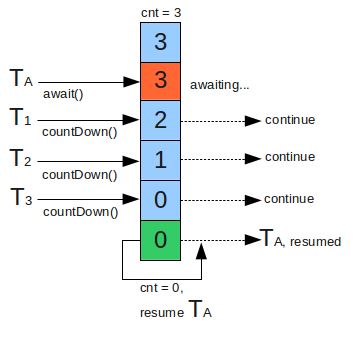
实现原理 countDown方法,计数器将减去1;CountDownLatch的await方法是会阻塞,直到计数器减至0时await方法则立刻返回。CyclicBarrier类。
CountDownLatch主要方法 1.构造函数 通过传入一个数值(count)来创建一个CountDownLatch,数值表示线程可以从等待状态恢复,countDown方法必须被调用的次数。
1 2 3 4 5 6 7 8 9 10 11 public CountDownLatch (int count) { if (count < 0 ) throw new IllegalArgumentException ("count < 0" ); this .sync = new Sync (count); }
2.countDown方法 当count本来就为0,此方法不做任何操作,当count比0大,调用此方法进行减1。
1 2 3 4 5 6 7 8 9 10 11 12 13 public void countDown () { sync.releaseShared(1 ); }
3.await方法 1.不带参数
1
2
3
public void await () throws InterruptedException { sync.acquireSharedInterruptibly(1 ); }
2.带参数
1
2
3
4
public boolean await (long timeout, TimeUnit unit) throws InterruptedException { return sync.tryAcquireSharedNanos(1 , unit.toNanos(timeout)); }
应用举例 典型用法1 一个典型应用场景就是启动一个任务时,主线程需要等待多个任务都执行完毕,之后再继续执行后续业务。比如现在需要给1000个手机号发送短信,我把发送短信的任务提交到一个线程池中,等线程池中的发送任务都执行完后,最后再关闭线程池。再比如批量取消订单、批量上传文件等等都是类似的场景。
具体做法是,将CountDownLatch的计数器初始化为new CountDownLatch(n),每当一个任务线程执行完毕,就将计数器减1 countdownlatch.countDown(),当计数器的值变为0时,在CountDownLatch上 await() 的线程就会被唤醒。
例如需要给1000个手机号发送短信消息,通常可以使用多线程的方式,使用CountDownLatch可以确保给所有手机号都发送了短信,具体做法示例:
1
2
3
4
5
6
7
8
9
10
11
12
13
14
15
16
17
18
19
20
21
22
23
24
25
26
27
28
29
30
31
32
33
34
35
36
37
38
39
40
41
42
43
44
45
46
47
48
49
50
51
52
53
54
package com.lzumetal.multithread.counter;import java.util.ArrayList;import java.util.List;import java.util.Random;import java.util.concurrent.*;public class CountDownTest1 { public static void main (String[] args) { List <String> mobiles = new ArrayList <>(); for (int i = 0 ; i < 1000 ; i++) { mobiles.add(StringUtil.getMobile()); } ExecutorService threadPool = new ThreadPoolExecutor (2 , 10 , 3000 , TimeUnit.SECONDS, new LinkedBlockingDeque <>()); CountDownLatch countDownLatch = new CountDownLatch (mobiles.size()); try { for (String mobile : mobiles) { threadPool.submit(() -> { try { } catch (Exception e) { sleep(); System.out.println(Thread.currentThread().getName() + "发送短信。。。" + mobile); } finally { countDownLatch.countDown(); } }); } countDownLatch.await(); System.out.println("===========已全部添加到线程池===========" ); } catch (InterruptedException e) { e.printStackTrace(); } finally { threadPool.shutdown(); } } public static void sleep () { try { TimeUnit.MILLISECONDS.sleep(new Random ().nextInt(500 )); } catch (InterruptedException e) { e.printStackTrace(); } } }
典型用法2 另一个个典型用法是:实现多个线程开始执行任务的最大并行性。注意是并行性,不是并发,强调的是多个线程在某一时刻同时开始执行。类似于赛跑,将多个线程放到起点,等待发令枪响,然后同时开跑。
做法是初始化一个共享的CountDownLatch(1),将其计数器初始化为1,多个线程在开始执行任务前首先 coundownlatch.await(),当主线程调用 countDown() 时,计数器变为0,多个线程同时被唤醒。
1
2
3
4
5
6
7
8
9
10
11
12
13
14
15
16
17
18
19
20
21
22
23
24
25
26
27
28
29
30
31
32
33
34
35
36
37
38
39
40
41
42
43
package com.lzumetal.multithread.counter;import java.util.Random;import java.util.concurrent.CountDownLatch;import java.util.concurrent.ExecutorService;import java.util.concurrent.Executors;import java.util.concurrent.TimeUnit;public class CountDownTest2 { public static void main (String[] args) throws InterruptedException { int COUNT = 5 ; CountDownLatch begin = new CountDownLatch (1 ); CountDownLatch end = new CountDownLatch (COUNT); ExecutorService executorService = Executors.newFixedThreadPool(COUNT); for (int i = 0 ; i < COUNT; i++) { int finalI = i; executorService.submit(() -> { try { begin.await(); System.out.println("运动员" + finalI + "开跑" ); TimeUnit.SECONDS.sleep(new Random ().nextInt(10 )); } catch (InterruptedException e) { e.printStackTrace(); } finally { System.out.println("运动员" + finalI + "已到达终点!" ); end.countDown(); } }); } System.out.println("倒计时3秒....." ); TimeUnit.SECONDS.sleep(3 ); begin.countDown(); System.out.println("比赛开始......" ); end.await(); System.out.println("比赛结束......" ); } }
注 :仔细分析,上面的起跑应该并不是严格意义上的同时刻并行的。因为虽然线程池的线程数量和任务数量是一样的,这样每一个线程会去执行一个任务,但考虑到cpu的核心数是未知的,并且结合cpu的分片原理,并不能确保5个线程在同一时刻开始执行任务。